
- About
- Innovation
- ProductsModular Integrated Construction(MiC)

Concrete MiC>

Steel MiC>

Aluminum MiC>
Other Products
AluBridge>

Alu-Scaffolding>

Alu-Furnishing>
- Projects
- News
- Contact us

Assembling buildings in a “building block” fashion, eliminating widespread dust on construction sites, and achieving production-to-delivery cycles of just two months – this vision is made possible by Modular Integrated Construction (MiC) technology, presenting a new paradigm for green building. In the first quarter of this year, Zhaoqing Customs cleared a cumulative total of 2,929 modular housing units destined for Hong Kong, with export volumes already surpassing last year’s annual sum. This firmly establishes Zhaoqing as a crucial production and export hub for MiC products. In recent years, a “super factory” located in Zhaoqing – Guangdong Aluhouse Technology Co., Ltd. (hereinafter ‘Aluhouse’) – has been spearheading the export of numerous modular integrated houses, significantly accelerating the pace at which ‘Made in China’ products compete in global markets.
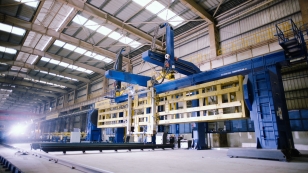
“Building Homes Like Automobiles”
In the traditional perception, constructing a building conjures an image of a dusty and noisy spectacle: intertwining scaffolding, piles of steel rebar and concrete scattered across the site, hundreds of laborers toiling under the scorching sun to tie rebar, set formwork, and pour concrete. It could take two to three years for a 30-story building to finally rise.
However, within Aluhouse’s manufacturing facilities, this traditional imagery is entirely revolutionized. “Here, houses are transformed into industrial products, and we construct them much like one would manufacture automobiles,” eloquently explains Tang Yungang, General Manager of Guangdong Aluhouse Technology Co., Ltd., elucidating the fundamental nature of MiC products.
Over 90% of the construction processes are ‘relocated’ to the factory floor. From structural fabrication to interior fit-out, all stages are completed seamlessly. Once individual modules are fully packaged and transported to project sites in Hong Kong or overseas, the remaining on-site work is limited to hoisting, connection, and utility hook-ups. The site remains remarkably clean and orderly, akin to assembling building blocks.
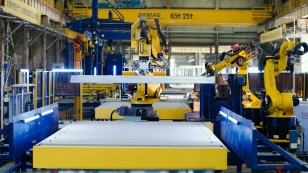
Mr. Tang Yungang summarizes the core advantages of this model across three key dimensions: quality, environmental sustainability, and efficiency. Regarding quality control, traditional construction often relies on manual on-site processes, whereas MiC products adhere to rigorous industrial production standards, ensuring consistent quality and exceptional precision.
The environmental benefits are equally significant. Traditional construction sites generate dust, noise, and construction waste, issues that have long posed significant management challenges for many urban centers. The MiC model shifts a substantial portion of the construction processes to the factory, thereby effectively reducing solid waste and mitigating dust emissions.
Aluhouse has not only successfully obtained the initial Hong Kong Modular Integrated Construction Manufacturer Certification (MiC-MAS) but its concrete MiC modules, specifically utilized for projects in Hong Kong, have also been awarded the prestigious “Bay Area Certification” certificate (specifically for the MiC sector). Notably, these are among the first green building materials products in Zhaoqing to receive this “Bay Area Certification.” Furthermore, Aluhouse implements a secondary recycling program for waste materials, such as aluminum molds and windows, generated during the manufacturing process.
Efficiency stands as one of the most compelling competitive advantages of MiC products. For instance, constructing a 30-story building using Aluhouse’s MiC technology can be accomplished in approximately one year, effectively reducing the construction timeline by a remarkable two-thirds. For commercial projects, this translates directly into earlier project commissioning and accelerated realization of commercial value.
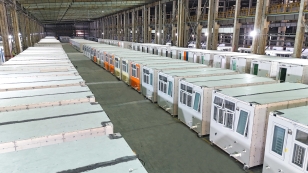
The “10-Minute Supply Chain” Underpins the “Super Factory’s” Strength
Hong Kong faces challenges with scarce land and labor resources, high labor costs, and critically urgent housing needs. In recent years, the local government has launched transitional public housing projects aimed at addressing the interim housing requirements of grassroots families.
As a Hong Kong-invested enterprise, Aluhouse, from its inception in 2014, astutely recognized the burgeoning global market demand for Modular Integrated Construction (MiC) and swiftly positioned itself within this blue ocean market segment. The company began by developing low-rise aluminum-structure accommodations, consistently reinvesting 3-4% of its annual revenue into research and development. This commitment led to the establishment of a comprehensive technical system encompassing aluminum, steel, and concrete structures, capable of meeting diverse architectural demands, from low-rise villas to high-rise residential buildings exceeding 100 meters.
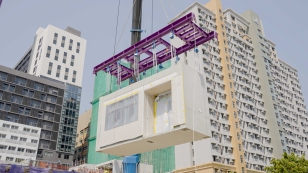
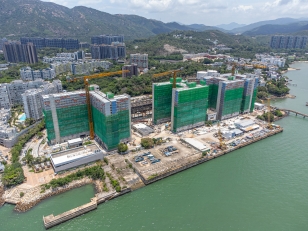
Currently, Aluhouse has established a strong market presence in Hong Kong, with over 60% of its business originating from the region. Its portfolio spans various sectors, including transitional public housing, schools, hospitals, and hotels. Notably, the Hong Kong Transitional Public Housing SSN520 project alone involved the delivery of nearly 16,000 MiC modules.
The “10-Minute Supply Chain” Underpins the “Super Factory’s” Strength
Hong Kong faces challenges with scarce land and labor resources, high labor costs, and critically urgent housing needs. In recent years, the local government has launched transitional public housing projects aimed at addressing the interim housing requirements of grassroots families.
As a Hong Kong-invested enterprise, Aluhouse, from its inception in 2014, astutely recognized the burgeoning global market demand for Modular Integrated Construction (MiC) and swiftly positioned itself within this blue ocean market segment. The company began by developing low-rise aluminum-structure accommodations, consistently reinvesting 3-4% of its annual revenue into research and development. This commitment led to the establishment of a comprehensive technical system encompassing aluminum, steel, and concrete structures, capable of meeting diverse architectural demands, from low-rise villas to high-rise residential buildings exceeding 100 meters.
Today, Aluhouse has cultivated a robust market presence in Hong Kong, with over 60% of its business originating from the region. Its portfolio spans various sectors, including transitional public housing, schools, hospitals, and hotels. Notably, the Hong Kong Transitional Public Housing SSN520 project alone involved the delivery of nearly 16,000 MiC modules.
To further enhance its production capabilities, Aluhouse leveraged AAG Aluminum Group’s established aluminum industry base in Zhaoqing. It has since established the Greater Bay Area MiC “Super Factory” in Zhaoqing High-tech Zone, sprawling over approximately 6.5 square kilometers. This facility boasts 250,000 square meters of indoor prefabrication workshops, capable of an annual production capacity of approximately 48,000 modules.
The Greater Bay Area’s comprehensive and efficient supply chain is a powerful enabler of the company’s growth. Raw materials such as aluminum and concrete are sourced locally, often less than one kilometer from Aluhouse’s production lines, reachable within five minutes. The majority of other construction materials, including lighting fixtures, paints, and fire-resistant materials, are supplied by enterprises within the Greater Bay Area. This not only significantly reduces logistics costs and time but also ensures controllable and traceable quality management.
“The Greater Bay Area’s strong manufacturing capabilities and advanced material technologies eliminate many of our concerns,” states Tang Yungang. By capitalizing on the Greater Bay Area’s complete industrial ecosystem, Aluhouse achieves rapid transformation from structural components to finished modules, laying a solid foundation for large-scale, high-efficiency order fulfillment.
Furthermore, the superior geographical location is another crucial reason for the company’s decision to establish its base in Zhaoqing. The Aluhouse production facility is situated adjacent to Zhaoqing’s Sihui Port, allowing MiC products to reach the dock in just half an hour, and be transported to Hong Kong in as little as 10 hours. Faced with tight project deadlines, concentrated shipments, and high demand for modules, Zhaoqing Customs has proactively offered its services, conducting in-depth surveys of the company’s annual export plans. They have tailored customs clearance solutions, seamlessly integrating regulatory requirements into the company’s production and logistics schedules.
Addressing the unique needs of modular housing – large volume and demanding loading/unloading procedures – Zhaoqing Customs has coordinated with the port to provide Aluhouse with dedicated storage yards and operational channels, implementing a “priority dispatch, direct loading” model. Leveraging a pre-booking clearance mechanism and a “green channel” for supplies to Hong Kong, Customs provides 24/7 clearance services. Once goods are manufactured at the factory, logistics and customs clearance processes are simultaneously initiated, achieving a seamless connection from the production line to export shipping, thereby reducing overall clearance time by 1 to 2 days.
It is precisely this combination of a complete supply chain, convenient transportation, and well-implemented policies that makes Zhaoqing an ideal strategic hub for enterprises to establish a foothold in Hong Kong and radiate globally.
Bringing More “Quality Homes” to the World
As more construction companies enter Hong Kong to compete for contracts, market competition is intensifying. Aluhouse has responded by expanding its industrial footprint and accelerating its global expansion, establishing localized factories and supply chain systems overseas. The Middle East and North America are the initial targets for this pioneering venture.
In 2016, Saudi Arabia officially launched its “Vision 2030,” with a key objective to increase Saudi citizens’ homeownership rate to 70% by 2030. Against this backdrop, the Saudi real estate market has flourished in recent years, witnessing robust demand for housing.
To better align with the demands of the Saudi market, Aluhouse constructed a 1:1 scale prototype villa, spanning 300 square meters, directly within its Zhaoqing factory. Recognizing Saudi Arabia’s hot climate, the company incorporated localized thermal insulation measures into the design, ensuring compliance with local regulations. Aluhouse is also bringing “China speed” to the Middle East – each villa’s production-to-delivery cycle is compressed to just 2 months, with a target of delivering 1,000 units annually.
Furthermore, Aluhouse plans to establish a large-scale integrated aluminum processing and modular building industrial base in Riyadh, Saudi Arabia. As a significant industrial development project under Saudi Arabia’s “Vision 2030” plan, this base will drive the growth of the aluminum processing and modular construction industries through localized production. The project focuses on core businesses such as aluminum profile processing, modular construction, and solar panel frames, aiming to become the largest and most comprehensive aluminum processing industrial base in Saudi Arabia and the wider Middle East.
This past April, Aluhouse garnered multiple awards at the 2026 Global Modular Building Expo in the United States. Its customized steel-structured Modular Integrated Construction (MiC) solutions, specifically designed for the North American market, garnered significant attention upon their debut.
Aluhouse has also identified the tangible market demand behind this – U.S. construction predominantly relies on traditional wood structures. However, applications like immigrant community apartments, dormitories, and mid-to-high-rise hotels require faster, more standardized, and more environmentally friendly construction methods. Therefore, the company’s full-chain technical advantages, encompassing R&D, production, and installation, precisely address the growing international demand for superior housing solutions.
“The overseas market will be a significant new growth point for us in the future,” says Tang Yungang with confidence. In addition to the Middle East and North America, Aluhouse plans to expand into markets such as Australia and New Zealand. The growth trajectory of Aluhouse offers a glimpse into the powerful transformation of “Made in China” from product output to technology and standards export, fulfilling the warm anticipation of more families, both domestically and internationally, for more comfortable, environmentally friendly, and safe “new homes.”
Short Commentary
Dust, noise, and construction waste on building sites were once challenging issues for urban governance and persistent pain points for the traditional construction industry. However, as green and low-carbon development increasingly becomes a global consensus, the green transformation of the construction industry is no longer an option but an imperative question that practitioners must address.
Building materials and metal processing are traditional pillar industries in Zhaoqing. In recent years, Jili Hardware has transformed into “intelligent manufacturing,” and Fengkai’s green building materials industry has reached the ranks of ten-billion-yuan industries, becoming a vivid microcosm of Zhaoqing’s traditional industries experiencing rejuvenation. Today, this fertile ground has also given rise to new “exemplars” – Aluhouse Co., Ltd., with its long-term dedication to Modular Integrated Construction (MiC). This model of “manufacturing” houses in factories and “assembling” them on-site eliminates the dust and disruption of traditional construction, propelling green building onto a new trajectory and opening up new development prospects.
Even more notably, Aluhouse is taking this green solution global. From exporting products to establishing overseas factories, Aluhouse, leveraging its Hong Kong market presence and Zhaoqing production base, has built a full-chain system from R&D to production and installation. It is now promoting its green construction philosophy across multiple regions worldwide, including the Middle East and the United States. This endeavor is driven not merely by astute business acumen but by the company’s proactive commitment to environmental responsibility, thereby driving Zhaoqing’s construction industry towards intelligent, green, and refined transformation and upgrading.
Previous chapterHong Kong firm, Saudi partner aim to build 30,000 modular flats a year in Middle East
AluHouse Company Limited
Total Solution Provider of Modular Construction
R&D . Design . Production . Supply . Installation

400-100-0289


Contact us
- AluHouse Company Limited
- Telephone
+852 3750 6123
- Address
Office G, 36/F., COS Centre, 56 Tsun Yip Street, Kwun Tong, Kowloon, Hong Kong
- AluHouse Technology (GD) Company Limited
- Telephone
+852 3750 6123
- Address
AAG Industrial City, Dawang High-tech Zone, Zhaoqing, Guangdong Province,PRC
;)
;)
All rights reserved, please do not copy without permission.